Water Heater Failure Signs: 5 Warnings for Immediate Repair
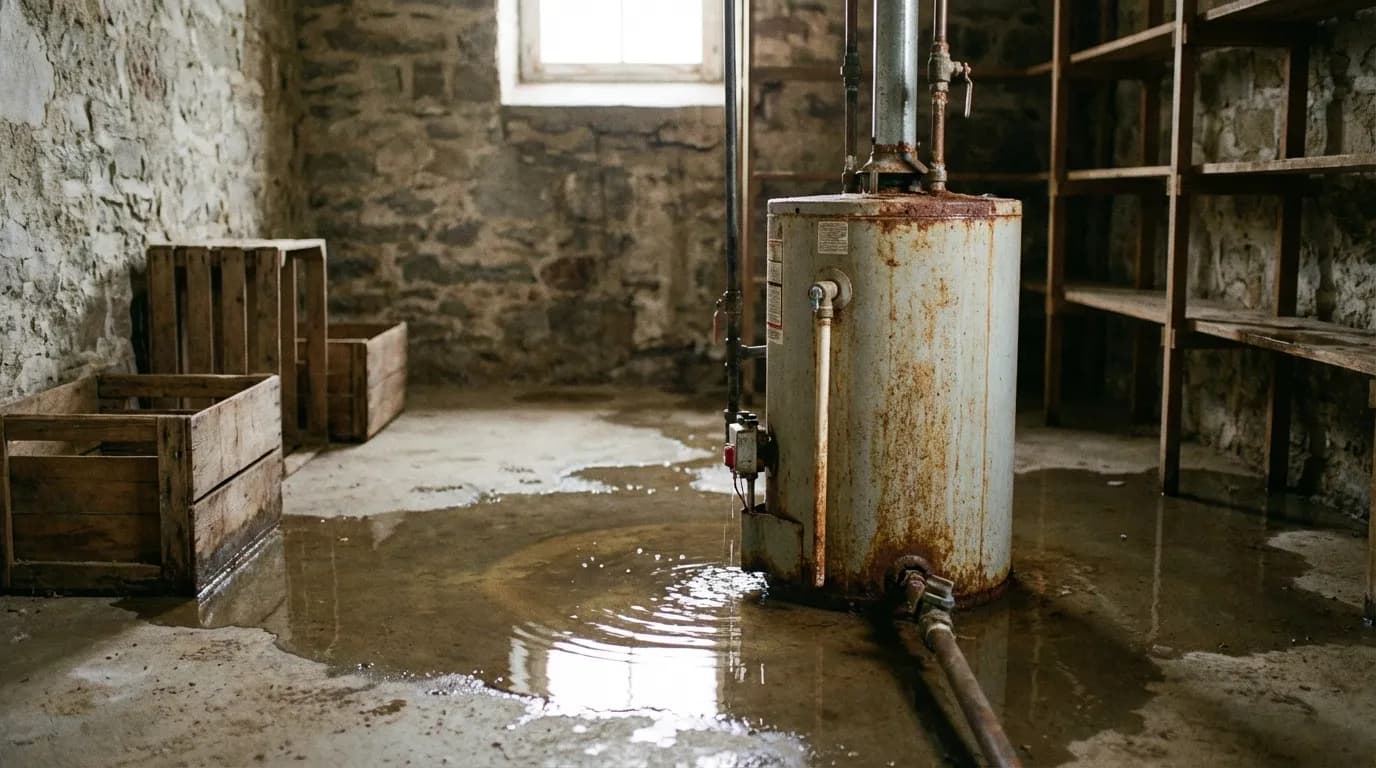
TLDR; Water heater failure is a true home emergency because it can cause water damage, disrupt daily routines, and signal larger system problems if ignored. Common warning signs include leaking or pooling water, rusty or foul-smelling hot water, loud noises, inconsistent temperatures, and sudden increases in energy bills. Homeowners should know when a repair is sufficient versus when replacement makes more sense, act quickly during a failure by shutting off water and power, and call a professional. Regular maintenance and early attention to warning signs can extend a water heater’s lifespan, reduce costs, and help prevent unexpected emergencies.
When a water heater breaks down, it rarely waits for a good time (and that’s putting it lightly). It often happens early in the morning or late at night, right when hot water feels like a must. One minute everything feels normal, with steady heat like always. Then, without much warning, you’re standing in a cold shower, trying to understand what went wrong so fast. For many homeowners, that kind of shock can turn a regular day into a real plumbing emergency, the kind no one plans for.
What makes this even more annoying is that water heater problems usually don’t appear out of nowhere. In many cases, warning signs show up weeks or even months in advance. People often miss them because they don’t know what to watch for. Others sense that something isn’t quite right but hope it will clear up on its own, which almost never happens. Water heaters don’t repair themselves. When early signs are brushed off, the results can include leaks, flooding, higher energy bills, and damage that spreads past the heater. Once those problems start, they tend to grow quickly, and so do the costs.
Dealing with hot water heater trouble can feel overwhelming, especially when you’re trying to decide what to do next. Is this a simple fix, or does the unit need to be replaced right away? That question alone can be exhausting. This guide helps clear up that confusion. It looks at five common water heater failure signs, explains what they usually mean, and points out when calling for emergency plumbing service often makes sense.
You’ll also find tips on how to limit damage while waiting for help, since small steps can really help. The guide explains the usual lifespan of a water heater and shares practical ways to plan ahead, so issues don’t catch you off guard. And if you’re facing an urgent plumbing problem, this article was written with you in mind.
Why Water Heater Failure Signs Are a True Home Emergency
A broken water heater is more than a small hassle, and many homeowners don’t realize that right away. In a lot of homes, it can quickly turn into a serious safety concern and put the property at risk, sometimes within the same day. When a tank fails, it can release dozens of gallons of water in only minutes. That water doesn’t stay in one place. It spreads through the utility room, moves into nearby floors and walls, and soaks furniture or stored items along the way. It’s chaotic and stressful, especially if it happens while someone is home.
What’s visible is often just part of the issue. Standing water often leads to damage that keeps growing out of sight. Mold can start forming within 24 to 48 hours in damp areas, which is where problems usually begin. Moisture also breaks down materials like drywall and subflooring over time, later showing up as soft areas or sagging. In multi-level homes, leaks often move downward, damaging ceilings, insulation, and sometimes electrical systems below. Because these issues add up so fast, plumbers and insurance companies usually treat water heater failures as real home emergencies, not simple repairs. There’s rarely much room for debate.
Industry research shows that age and sudden internal damage are the most common causes. These failures often happen without warning, which explains why they catch people off guard. When a tank finally breaks, cleanup and repairs are usually expensive. In many cases, the final cost is much higher than replacing the unit earlier would have been, a hard lesson to learn.
| Water Heater Type | Average Lifespan | Common Failure Point |
|---|---|---|
| Tank Water Heater | 8, 12 years | Internal tank corrosion |
| Tankless Water Heater | Up to 20 years | Heating element failure |
As the table shows, tank-style units tend to have a shorter lifespan. Once corrosion begins inside the tank, it can’t be stopped, and it usually continues to spread. That’s why even a small leak should never be ignored.
If water reaches other parts of the plumbing system, more problems can follow. Hidden leaks or burst lines may appear later, often at the worst possible time. Acting quickly helps reduce the damage. Knowing the warning signs helps, like spotting a leak before it reaches the ceiling below. More serious plumbing risks are explained here: 7 Signs You Need Emergency Plumber Right Now. For further insights, see Research: Common Plumbing Failures in Homes.
Warning Sign 1: Pooling Water or Active Leaks Around the Tank
Pooling water around a water heater is often the clearest sign that something isn’t right. Even a small puddle at the base matters and usually needs attention. It often starts quietly and is easy to brush off (and yes, that’s tempting). Sometimes the moisture comes from a loose fitting or nearby plumbing, and that does happen. But when water keeps collecting right next to the tank itself, that’s different. More often than not, it points to a problem inside the unit. That’s when concern really begins.
Leaks are one of the most obvious signs a water heater is going bad, but they aren’t always catastrophic failures. Some leaks come from loose fittings, a failing temperature and pressure relief (T&P) valve, or condensation. However, pooling water around the tank body itself is a serious concern.
Knowing the difference between harmless condensation and a real leak can save you a lot of trouble. Condensation usually looks like light sweating and often dries on its own. A leak doesn’t act that way. It keeps spreading, and the area may feel warm when you touch it, which is usually a red flag. When these signs are ignored, corrosion often keeps working quietly in the background. Damage builds where you can’t see it, and that wear can sometimes lead to a sudden tank failure with no extra warning.
Once the tank itself is leaking, replacement is usually the safest choice, in my view. Repairs can’t undo rust inside the tank walls. What looks like a slow drip can turn into a major problem faster than most people expect. Many homeowners only realize this after dealing with a flooded basement.
If you see water spreading, shut off the heater’s water supply if it’s safe to do so. Then call a 24/7 plumbing service. To reduce damage while help is on the way, there are a few practical steps covered here: How to Stop Water Leak Before Plumber Arrives. You can also explore related guidance in Signs of Burst Pipes: When to Call a Plumber.
Warning Sign 2: Rusty or Discolored, Smelly Hot Water
Hot water is expected to be clear and clean. When brown or yellow water starts coming from a hot tap, it often points to corrosion starting inside the water heater, which is rarely good news. As the tank slowly breaks down, rust flakes can loosen and mix into the water. That’s why this issue often shows up first at sinks or tubs you use every day. From experience, this is one of the clearest water heater failure signs that a unit is getting closer to breakdown.
Bad smells can show up too. A sulfur or rotten egg smell usually means bacteria has built up inside the tank. This happens more often in older units or heaters that haven’t been used much for a while. The anode rod is meant to slow down corrosion, but once it wears out, damage speeds up and bacteria can grow more easily.
Discolored hot water doesn’t always mean a major leak will happen tomorrow. Still, it usually shows that damage inside the tank has already started, and that’s something to pay attention to. Corrosion doesn’t fix itself, and leaks often follow before long.
If the cold water stays clear while the hot water looks or smells wrong, the heater is almost always the cause. A professional can check whether a repair makes sense or if replacement is the safer option, which is usually better to look into sooner rather than later.
Warning Sign 3: Loud Noises Coming From the Water Heater
Rumbling, popping, banging, or knocking sounds are a common hot water heater problem, especially in older units. Most of the time, this happens because sediment builds up at the bottom of the tank. Minerals in the water slowly settle over the years and harden into a thick layer. This buildup takes a long time to form, and it doesn’t flush out by itself, which helps explain why the noise keeps returning.
This is where problems start to pile up. When the burner heats the water, that hardened sediment heats up as well. Small pockets of trapped water push upward and break through the layer, which causes the sharp, sudden noises you hear. While this is happening, the bottom of the tank often overheats. That extra heat puts steady stress on the metal walls, which, in my view, usually makes internal cracks more likely as time goes on.
As the stress continues, cracks and leaks can develop. Efficiency drops too. The heater has to run longer and work harder to deliver the same amount of hot water. That often leads to higher energy bills and, over time, a shorter lifespan. It’s more effort for less return in many cases.
Early on, flushing the tank can sometimes reduce the noise. But for units over ten years old, sediment often points to bigger issues ahead. When the sounds get louder or happen more often, planning a replacement is usually safer than waiting for an unexpected breakdown, which rarely ends well.
Warning Sign 4: Inconsistent or Lukewarm Water
The biggest clue is how unpredictable the temperature feels. Showers turn cold too fast, or the water never really gets hot, and the system is likely under pressure (and yes, it’s frustrating). Uneven temperature is often one of the clearest water heater failure signs that something deeper is wrong. You’re left with short showers, little steam, and a unit that can’t keep up when you need it. This usually points to worn heating elements, or a mix of burner issues and internal damage.
What makes this tricky is how quietly it starts. At first, it feels like someone else used all the hot water. Later, it happens even when hardly anyone’s home. That slow change often means parts are wearing down, or sediment has built up and is blocking heat from reaching the water.
With electric units, burned-out elements are a common cause. Gas units more often have trouble with burners or gas valves, which are harder to spot. Some fixes work if caught early, but when a heater is near the end of its lifespan, replacement is often the safer, less stressful choice.
Warning Sign 5: Sudden Spikes in Energy Bills
When a water heater starts to lose efficiency, it often needs more energy just to keep up with everyday use. That’s why one of the first signs is usually a jump in your gas or electric bill. It can catch you off guard, and yes, it’s frustrating. A lot of homeowners don’t connect that change to the water heater right away, but in many cases, it’s a real signal and keeps showing up month after month.
Sediment buildup or worn-out heating elements can make the unit work harder than it should. Aging parts don’t help either, since this is often plain wear and tear over time. The heater ends up running longer cycles, which slowly drives costs up. Energy efficiency studies show that an inefficient water heater can increase water-heating costs by 10 to 30 percent each year, and that adds up quicker than most people expect.
If your bills go up and nothing else in the house has changed, the water heater deserves a closer look. This is where help matters. An emergency plumber can check how it’s running, catch problems early, and help stop a breakdown before it becomes a much bigger headache.
Repair vs Replacement: How to Make the Right Call
Figuring out whether to repair or replace a struggling water heater is one of those decisions homeowners often wrestle with, and it rarely feels simple. Age is usually the first thing that points you in one direction or the other. Most tank-style heaters last around 8 to 12 years, and many finally quit around year 13, often at the least convenient time. That kind of timing usually isn’t random.
Water heater replacement was spurred by unit failure or the unit becoming old / needing replacement before failure, with the average age of the unit replaced being 13.2 years.
Cost and reliability are just as important. When repairs keep happening or the unit isn’t running as efficiently, small problems can stack up faster than you might expect. You’ll often hear about the 50 percent guideline: if a repair costs more than half the price of a new unit, replacing it usually makes better financial sense and can cut down on repeat service calls.
So how does this play out day to day? If the heater is under eight years old and the problem is small, repairing it can make sense. But once it’s over ten years old and showing several water heater failure signs, replacement is often the safer bet, since older units tend to fail close together and emergency replacements leave you with fewer options.
Emergency Steps to Take When Your Water Heater Fails
When a water heater starts leaking or suddenly stops working, acting fast can really help, and this happens more often than most people think. The main problem is usually the water coming into the unit, so shutting off the supply to the heater is a good first step. You should also turn off the power or gas, but only if it’s easy and safe to get to, taking risks in a stressful moment rarely ends well.
Next, speed makes a big difference. Calling a 24/7 plumber right away can limit damage and save time, since emergency teams handle broken water heaters every day and know what to look for. DIY repairs may sound appealing, but water mixed with electricity or gas can be dangerous, and small mistakes can lead to injuries or fire risks.
If water moves past the heater area, more than one plumbing problem could be happening. Knowing how these issues show up can help, and that’s covered in Burst Pipe vs Water Leak: Key Differences.
Preventing Future Water Heater Emergencies
Most emergencies usually trace back to early signs that were missed. A good first step is knowing the heater’s age, simple info that often gets ignored. If the install date isn’t clear, a plumber can usually find it without much trouble. Once a unit is around eight years old, regular inspections often make sense, since they can help avoid surprises later. That approach tends to work well in most cases.
Sediment buildup is another quiet problem. Regular flushing can improve efficiency, and checking the pressure relief valve helps keep things safe. The anode rod also matters; replacing it as it wears down slows corrosion and can extend the tank’s life, which is usually worth doing.
In areas with hard water, these steps matter even more. Minerals build up faster and problems show up sooner. A water softener can help protect the system over time and support the rest of the plumbing too, which can save headaches later on. You can also learn maintenance tips in How to Fix Low Water Pressure in Your House.
Common Questions, Answered
How long does a typical water heater last?
Most tank water heaters last about 8, 12 years. Tankless systems can reach 20 years with maintenance, and that helps. I think lifespan mostly depends on water quality and daily use, and regular service can help extend those extra years.
Are small water heater leaks always an emergency?
Yes, they should usually be taken seriously, since even small water heater leaks, including drips, can grow fast. Slow leaks often cause water damage or mold if ignored; they aren’t harmless, and waiting often makes the damage worse.
Probably not a good idea, in my view. If you run a leaking heater, pressure can rise and force the leak to spread faster. It’s best to turn the unit off. Call an emergency plumber right away.
Why does my hot water smell bad?
Bad smells come from bacteria in the tank or from corrosion. It’s more common in older units because they’ve had time to wear down. This points to internal problems, so noticing it means it needs attention soon.
Is replacing a water heater expensive?
Cost depends on the unit and installation needs, which can vary. Planned replacements usually cost less. Emergency jobs involve failures and water damage at bad times, driving prices up. Big difference.
The Bottom Line for Homeowners Facing Water Heater Failure Signs
Signs of water heater failure aren’t something to ignore. Leaks, rust, strange noises, weak hot water, and higher energy bills usually point to trouble ahead, and they’re rarely hard to notice. You’ve likely seen at least one of these already. Taking action early can protect your home and, in my view, help keep repair costs from creeping up and putting pressure on the monthly budget.
Not sure if the heater is really the issue? Many times, your gut feeling is right. A simple step is calling a 24/7 plumbing service. They can fix a small leak or worn part before water spreads across floors or into walls. That’s often when repairs turn costly, and emergency plumbers are available day or night to step in.
Staying informed is often your best defense. Planning ahead for replacement, keeping an eye on water heater failure signs, and checking with a professional when you’re unsure can make a real difference, like fixing a drip before it soaks the laundry room floor.